More Than a Ride: How Commuter Krewe Is Supporting Our Vulnerable and Making Positive Changes

Getting to work every day is something many of us take for granted. But for survivors of trauma and those navigating life after a crisis, just showing up to work or class can feel like an overwhelming feat. The financial weight of a daily commute, the isolation of sitting alone in traffic, and the mental load of managing it all can quietly chip away at a person’s ability to heal, grow, and thrive.

That’s where Commuter Krewe comes in — and why it matters beyond the issue of traffic congestion.

Commuter Krewe is an online-based portal that connects drivers with riders looking to carpool, saving people time and money. A service of the Capital Region Planning Commission in Baton Rouge, the program allows commuters living in parishes in the surrounding capitol region to find a rideshare and log commute trips. It’s free to join, easy to use, and designed for real people especially with constraints such as distance or cars that aren’t always reliable. And yes, participants’ information in the Commuter Krewe database is kept confidential.

For survivors of sexual assault, domestic violence, or other trauma, transportation is often an overlooked barrier to recovery. Many trauma survivors are working to rebuild financial stability after experiencing harmful situations. Oftentimes, survivors take lower paying jobs just to have some type of income as they regain their footing while trying not to drain the few funds they have. A reliable, trusted carpool connection doesn’t just save gas money — it can be the difference between making ends meet or not.

Through the Krewe Bucks Incentive Program, commuters who sign up and log their alternative commutes in the Commuter Krewe app can earn Visa gift cards during their first 90 days. After that initial period, the Krewe Club program provides $20 Visa gift cards to commuters who log a minimum of 20 alternative commutes each quarter (every three months). For someone earning a modest income, not only are they not spending money on gas and can put that money towards other bills, but that kind of tangible reward isn’t a small perk — it’s real money in their pocket that can go toward groceries, utilities, or school supplies. (commuterkrewe)

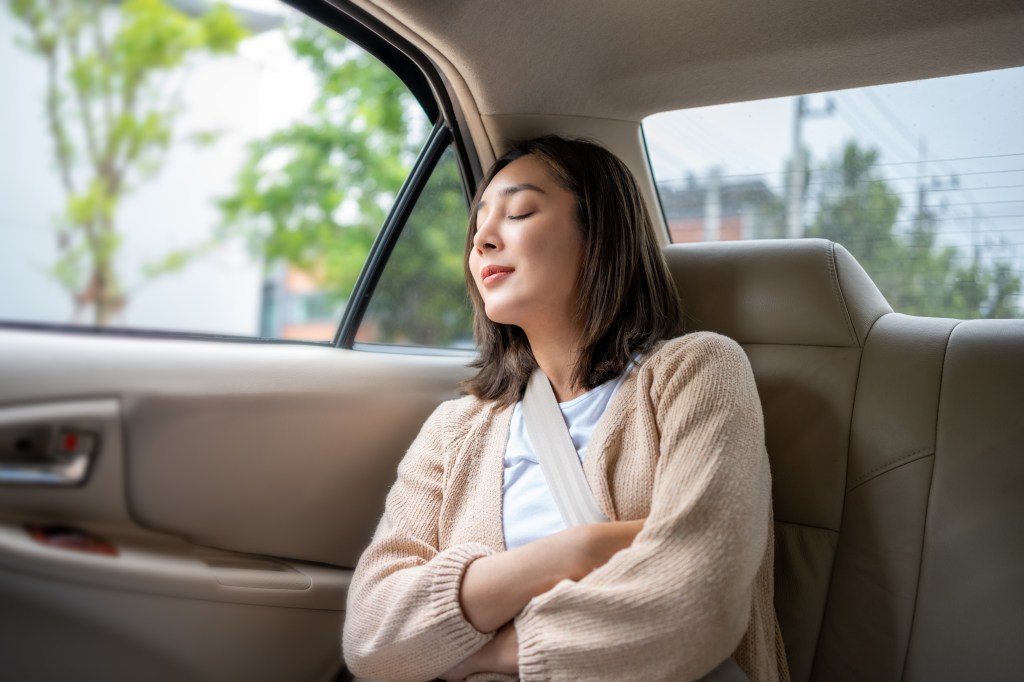
There’s also something to be said for the human element. For people who have experienced isolation as part of their trauma, the simple act of sharing a consistent ride can promote social connections and enhance emotional well-being by removing the stress of worrying over transportation. The commute can actually become one of the more enjoyable and/or peaceful parts of the day. 

The cool thing is that, though in this article we put a focus on survivor support, this program is for anyone – yes, anyone. Commutes and traffic can be annoying, to say the least. Scooting a few feet at a time in congestion or traveling a few miles an hour adds up to an average commute of 45 minutes or more each way for thousands – whether it’s to get to work or to class. Why not make the time count in some capacity? As a student you can get that last minute cram in for a test or have a passenger quiz you if you’re a driver. As someone heading to work, you might start a “true crimes” listening and discussion group.

Hopefully one can see the benefits of joining this program, but there may be questions, like, “Do drivers AND riders get compensated? How do I connect with a ride? Are you in my parish? What if I get stranded? How do I get my gift card? Can I use any kind of car? Can my workplace coordinate rides?” All these questions and many more details about the Commuter Krewe program are discussed as LaFASA talks with Kenyatta Robertson, CK Program Director and “CJ” Jones, CK’s Sr. Outreach Coordinator. It’s a great conversation that you won’t want to miss on our Keepin’ It Teal podcast. Listen here.

And check out the website for info or to sign up.
Breaking Transportation Barriers to Get Needed Treatment Using Uber

Studies show that almost six million people in the US don’t receive health-related care every year due to transportation issues. Research also shows that even one missed appointment can lead to significantly increased rates of patients ceasing health related care.1

As a means to tackle this issue, Uber Health aims to reduce barriers to healthcare access by providing a simple and effective transportation solution tailored to the needs of patients and healthcare providers for Non-emergency Medical Treatment (NEMT).

Uber Health is a platform designed to help healthcare organizations arrange transportation for their clientele, ensuring that individuals have reliable access to medical appointments and other health-related services. There are very few restrictions as to who qualifies to use this service. Among those who have benefited from the program are seniors, children with sickle-cell anemia, maternity patients, cancer patients, and those transitioning from mental health facilities back to their communities. Uber Health is a HIPAA-compliant platform that allows care organizations to connect to ride options that help improve their level of care and services. Here’s how it works:

For Healthcare Organizations:

  1. Sign Up: Healthcare organizations (e.g., hospitals, clinics, service centers, senior care facilities) sign up for Uber Health to manage transportation needs for individuals.
  2. Dashboard Access: They gain access to a centralized dashboard to book and manage rides for those in need.
  3. Booking Rides: Organizations can schedule rides immediately or in advance, even if the person does not have the Uber app or a smartphone. They just need the person’s basic contact information.
  4. Patient Communication: Ride recipients receive notifications about their rides via text message or phone call, including details about the vehicle and driver.
  5. Billing: Uber Health offers flexible billing options, allowing organizations to pay for rides through various payment methods, including medicaid. Some health insurance providers may cover these rides. Detailed trip reports and invoices are provided for record-keeping and compliance. In addition riders can pay out of pocket or utilize medicare (which can be used by those who are disabled and senior citizens). One thing for victim service providers to consider is that VOCA grants will cover transportation, as per page 22 of the most recent tool kit: “Direct costs of implementing the core eligible services – for example, transportation costs for victims to receive services.”

For Riders:

  1. No App Required: Riders do not need to have the Uber app or a smartphone. They can receive ride details via text message or a call. This is especially comforting to those in stalking situations or domestic violence recovery programs.
  2. Scheduled Rides: If preferred, riders can have rides scheduled by their healthcare provider to ensure they get to and from their appointments on time.
  3. Ride Details: Riders are informed about their driver’s name, car type, and estimated arrival time.
  4. Safe and Reliable: Uber Health ensures that all rides adhere to the safety and quality standards set by Uber, offering a reliable transportation option for those in need.

Key Benefits:

  • Accessibility: Ensures patients who may not have reliable transportation or a smartphone can still get to their medical appointments.
  • Efficiency: Streamlines the process of arranging transportation, reducing missed appointments and improving patient care.
  • Confidential: Uber Health is a HIPAA-supported technology solution that has helped hundreds of thousands of patients and caregivers get to and from care. Providers can also use Uber Health to help get crucial staff to work.
  • Compliance: Provides detailed reporting and documentation to help healthcare and healthcare-related organizations comply with regulations and manage transportation budgets.

Included in Uber Health services are prescription medicine pick-up and grocery pick-up. Uber is doing everything possible to make these rides safe and comfortable. Drivers differ by service within Uber Health, but all are screened before being matched to a request and re-screened at various intervals after that. For rides and grocery/OTC delivery on the Uber platform, Uber Health leverages Uber’s existing driver network.

NEMT rides are powered by a third party that specializes in healthcare transportation. Those riders will be connected to full-time employees of transportation companies who are specifically trained to assist with physical, visual, or mobility needs.

Prescription delivery through Uber Health is powered by ScriptDrop, which manages a network of couriers who include but are not limited to delivery people who use the Uber platform.2

INCREASED AVAILABILITY, EVEN IN RURAL LOUISIANA AREAS
Considering that our state has much more rural areas than metropolitan areas, it’s easy to see that the program is expansive. There are 198 towns/cities in Louisiana that have NEMT services in place:

Abbeville, LA    Abita Springs, LA     Addis, LA     Albany, LA     Alexandria, LA

Ama, LA      Arabi, LA    Avondale, LA     Baker, LA    Baton Rouge, LA

Belle Chasse, LA     Bossier City, LA     Boutte, LA    Breaux Bridge, LA    Broussard, LA

Brusly, LA    Carencro, LA    Chalmette, LA     Covington, LA    Crowley, LA

Denham Springs, LA    Destrehan, LA    Duson, LA    Fort Polk South, LA    Gonzales, LA

Greenwell Springs, LA    Greenwood, LA    Gretna, LA     Hahnville, LA    Hammond, LA

Harahan, LA    Harvey, LA     Haughton, LA     Houma, LA     Iowa, LA

Jefferson, LA     Kenner, LA     La Place, LA     Lacombe, LA     Lafayette, LA

Lafitte, LA     Lake Charles, LA     Leesville, LA     Livingston, LA     Luling, LA

Madisonville, LA     Mandeville, LA    Marrero, LA     Maurice, LA     Meraux, LA

Metairie, LA     Monroe, LA     Morgan City, LA      New Iberia, LA     New Orleans, LA

Norco, LA     Opelousas, LA     Pearl River, LA     Pineville, LA     Plaquemine, LA

Ponchatoula, LA     Port Allen, LA     Port Vincent, LA     Prairieville, LA      Rayne, LA

Reserve, LA     River Ridge, LA     Ruston, LA     Saint Bernard, LA     Saint Gabriel, LA

Saint Martinville, LA     Saint Rose, LA      Scott, LA     Shreveport, LA     Slidell, LA

Sorrento, LA      Springfield, LA       Sulphur, LA      Sunset, LA      Terrytown, LA

Thibodaux, LA      Tickfaw, LA       Violet, LA      Walker, LA      West Monroe, LA. Westlake, LA Westwego, LA Youngsville, LA

NEW DEVELOPMENTS IN THE PROGRAM
The Uber Health program is primarily operated by both patient and provider, however starting this month Uber has expanded this program to accommodate those who are patient caretakers. Uber Caregiver is a new initiative toward innovating caregiving support and addressing the needs of millions of caregivers across the United States. The program is tailored specifically for caregivers and their loved ones, aiming to tackle challenges head on and enhance the overall care experience. While Uber Caregiver is particularly beneficial for seniors who face transportation challenges, and it is anticipated they will make the bulk of passengers, it is designed to be inclusive. Anyone who has a caregiver or needs assistance getting to medical appointments can utilize the program.

For more information or to have questions answered, you’re encouraged to visit Uber Health’s website or Uber Caregiver’s website.

1 Mary K. Wolfe, Noreen C. McDonald, and G. Mark Holmes, “Transportation Barriers to Health Care in the United States: Findings from the National Health Interview Survey, 1997-2017” (May 6, 2020).

2 Uberhealth FAQs: https://www.uberhealth.com/us/en/faq/

Uber is taking the stress out of finding a ride to appointments. Safety for passengers and convenience for providers are their top priorities.