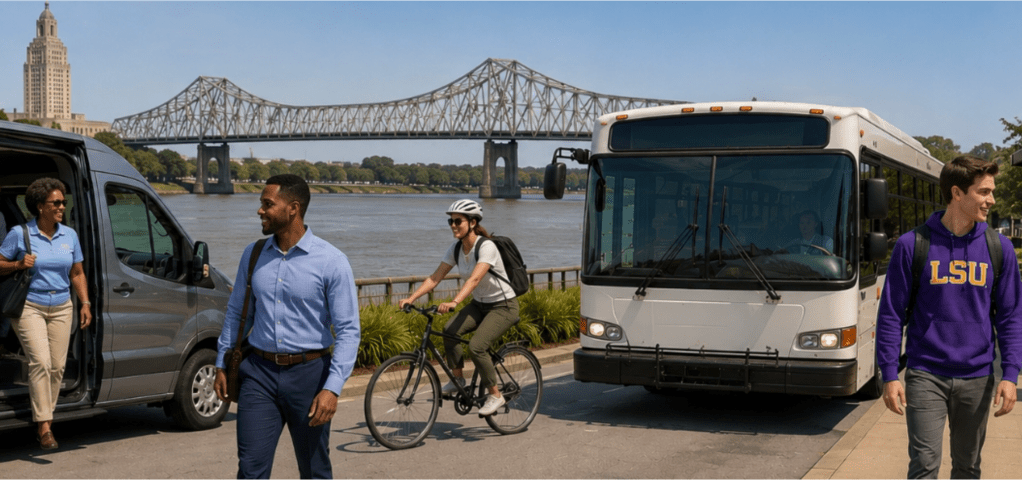
Getting to work every day is something many of us take for granted. But for survivors of trauma and those navigating life after a crisis, just showing up to work or class can feel like an overwhelming feat. The financial weight of a daily commute, the isolation of sitting alone in traffic, and the mental load of managing it all can quietly chip away at a person’s ability to heal, grow, and thrive.
That’s where Commuter Krewe comes in — and why it matters beyond the issue of traffic congestion.
Commuter Krewe is an online-based portal that connects drivers with riders looking to carpool, saving people time and money. A service of the Capital Region Planning Commission in Baton Rouge, the program allows commuters living in parishes in the surrounding capitol region to find a rideshare and log commute trips. It’s free to join, easy to use, and designed for real people especially with constraints such as distance or cars that aren’t always reliable. And yes, participants’ information in the Commuter Krewe database is kept confidential.
For survivors of sexual assault, domestic violence, or other trauma, transportation is often an overlooked barrier to recovery. Many trauma survivors are working to rebuild financial stability after experiencing harmful situations. Oftentimes, survivors take lower paying jobs just to have some type of income as they regain their footing while trying not to drain the few funds they have. A reliable, trusted carpool connection doesn’t just save gas money — it can be the difference between making ends meet or not.
Through the Krewe Bucks Incentive Program, commuters who sign up and log their alternative commutes in the Commuter Krewe app can earn Visa gift cards during their first 90 days. After that initial period, the Krewe Club program provides $20 Visa gift cards to commuters who log a minimum of 20 alternative commutes each quarter (every three months). For someone earning a modest income, not only are they not spending money on gas and can put that money towards other bills, but that kind of tangible reward isn’t a small perk — it’s real money in their pocket that can go toward groceries, utilities, or school supplies. (commuterkrewe)
There’s also something to be said for the human element. For people who have experienced isolation as part of their trauma, the simple act of sharing a consistent ride can promote social connections and enhance emotional well-being by removing the stress of worrying over transportation. The commute can actually become one of the more enjoyable and/or peaceful parts of the day.
The cool thing is that, though in this article we put a focus on survivor support, this program is for anyone – yes, anyone. Commutes and traffic can be annoying, to say the least. Scooting a few feet at a time in congestion or traveling a few miles an hour adds up to an average commute of 45 minutes or more each way for thousands – whether it’s to get to work or to class. Why not make the time count in some capacity? As a student you can get that last minute cram in for a test or have a passenger quiz you if you’re a driver. As someone heading to work, you might start a “true crimes” listening and discussion group.
Hopefully one can see the benefits of joining this program, but there may be questions, like, “Do drivers AND riders get compensated? How do I connect with a ride? Are you in my parish? What if I get stranded? How do I get my gift card? Can I use any kind of car? Can my workplace coordinate rides?” All these questions and many more details about the Commuter Krewe program are discussed as LaFASA talks with Kenyatta Robertson, CK Program Director and “CJ” Jones, CK’s Sr. Outreach Coordinator. It’s a great conversation that you won’t want to miss on our Keepin’ It Teal podcast. Listen here.
And check out the website for info or to sign up.