If You’re All You’ve Got Over the Holidays, then You ARE Enough!

The holiday season is in full swing, bringing parties, gatherings, and festive meals. While it appears to be a time of constant connection, many actually spend their holidays alone. For some, it’s due to limited social and family circles or a break-up/divorce; for others past trauma makes participation difficult. Whatever the reason, if you find yourself spending this season on your own, whether it’s by choice or not, just know that you truly can experience it with amazing joy. The big key is to realize if you’re all you’ve got over the holidays, then you ARE enough!
All the fanfare makes it seem as connecting with friends or family or on social media are the only ways to enjoy the season, but connecting doesn’t have to be defined by those parameters. Connecting could be with people outside of a regular social circle or with yourself. And when you can control how you connect, then there is attainable peace for the holidays.
If you are interested in connecting with people, then you may consider volunteering. By its nature alone, volunteering is a connection. When you offer yourself you are making a difference in the lives of other volunteers and those receiving a service. Selfless acts such as this have a way of filling your heart with warmth and gratitude, even if you had warmth and gratitude to begin with; you can never have too much of that kind of a good thing. If you begin to volunteer often, each experience will resonate with you, occupying your thoughts more than other matters.
Connecting with others doesn’t always mean forming lifelong friendships. Sometimes it’s simply sharing a small, positive moment with random people you encounter. Maybe the person handing you your coffee has a cool tattoo, or the cashier at the dollar store is wearing a perfume that smells amazing. If something about them stands out, say so. These little exchanges may last only a few seconds, but they fill your soul—and theirs. The more you offer kindness, the more connected you are and the better you feel.
Show yourself how much you love you and are worth special treatment by making (or taking out) your favorite meal once a week from now until after the new year. Make it a fantastic dinner (or breakfast or lunch) customized JUST to you and don’t hold back. Decorate the table with fresh flowers and use your best dishes and flatware. Drink your favorite drink and have dessert! You deserve only the best. If there are leftovers, then bonus, they can be used for future meal preps. 
If spirituality or faith is part of your life, consider attending a service—online or in person. Sharing space (even virtually) with others who hold similar beliefs can create a sense of belonging and uplift your spirit. With countless livestream services and recordings available, you can view according your schedule. Moments of spiritual unity, whatever that looks like for you, can remind you that you’re supported in ways that go beyond routine interactions. Connecting with someone or something that is of a higher power builds confidence in knowing that while you may be single, you are not alone.
You can also have a holiday movie marathon. Pick a list of films—heartwarming, funny, nostalgic, or anything that brings you joy—and watch one or maybe even two each night. Add cozy touches like hot tea or cocoa, popcorn, or a crackling fire if you have a fireplace. This routine can become a comforting highlight of your day, whether you unwind after work or if you’re working a later shift, you can start your morning on a peaceful note. It sets precedent for starting the day on the right foot and spreading a cheerful attitude to others as you work.
If you really want to indulge in an activity that not only occupies your mind, but increases your aptitude and understanding, then find a skill you’ve always wanted to master, work on the skill and think of ways you can use this skill to improve others’ lives. For instance, if you like to work on cars, find a way to increase your knowledge surrounding car issues. Perhaps your background is combustible engines, but you want to learn about electric cars. Or perhaps you want to start your own side gig making quilts. Or perhaps you like to cook and always wanted to try your hand at cake decorating. There are thousands of how-to videos on YouTube, Vimeo, Udemy, and more. You can actually become an expert at your own pace. An activity such as this occupies your mind, adds substance to your life, and when you share your skill, it adds substance to others’ lives, too.
If you celebrate Christmas, then on Christmas day create a cozy atmosphere in your home. Light candles that have a “Christmasy” smell, such as evergreen or vanilla or peppermint. Take a long bath with cranberry bath bombs. Use a rich oil to moisturize your skin while drinking a nice tea or a glass of wine. Do your hair, make-up, and put on a special outfit. Take extra time fixing your special meal to be on Christmas day. Give yourself a gift(s) that was/were wrapped in advance. Spend time prayerfully thanking God for sending His son. During Hanukkah, you can do the same thing–celebrate each day and on the final night, light all eight candles of the menorah plus the shamash. Have your special spa-day and dress up. For your special meal, enjoy potato pancakes and sufganiyot (jelly-filled doughnuts). Give yourself gelt. Thank God for the miracles performed during Hanukkah. Position the menorah in a visible location to laud the miracle. If it’s Kwanzaa that you celebrate, then try the things discussed in this article to recognize unity, self-determination, collective work and responsibility, cooperative economics, purpose, creativity, and faith. Whatever your faith, simply practice gratitude. Take time to reflect on what you’re grateful for and focus on the positive things in your life. When we’re grateful for the things we do have, we forget the things we don’t have or they seemingly feel less important. And truly, it is a great time of year to reflect on the blessings that are present.
Sometimes it can be challenging to be alone for the holidays. Focusing on the things you can touch, see, smell, and control will change your experience to make the holidays enjoyable and fulfilling. It’s a great time to start your very own new traditions or skills that will naturally increase those serotonin levels. Your presence, your well-being, and your happiness matter. Just remember, you ARE enough.

Exploring the issues of Black women’s bodily autonomy

by DiQuisha Harbor, Xavier University student
2024 LaFASA Red Zone Awareness Ambassador

The systemic denial of Black women’s bodily autonomy is deeply rooted in the intersecting forces of racism, sexism, and colonial legacies, which continue to create the need for rectitude in healthcare, agency, and the societal value of Black women’s bodies. This essay seeks to explore these issues and advocate for meaningful change by examining historical and contemporary systems of oppression. I will argue that three critical theories of Blackness—Afro-pessimism, intersectionality, and womanist theory—explain how these forces work together to marginalize Black women, particularly in moments of crisis. These frameworks reveal that the neglect and exploitation of Black women in medical research, public health, and daily life are not isolated incidents, but interconnected practices rooted in history and perpetuated by systemic structures. This argument is grounded in the understanding that anti-Blackness, sexism, and colonial legacies converge to erase Black women’s voices and needs. To demonstrate this, I will discuss (1) the history of medical exploitation of Black women, with a focus on unethical practices such as those conducted by J. Marion Sims, (2) the systemic exclusion of Black women from public health decision-making, as seen in the perpetuation of health disparities during crises, and (3) the ongoing dismissal of Black women’s pain and autonomy in modern healthcare systems, where bias and racism persist. In addition to analyzing these systems, I will introduce a concept I call embodied resilience, which highlights how Black women resist these oppressive structures by reclaiming their bodies, narratives, and health practices. This resilience reflects the strength and agency of Black women in the face of systemic devaluation and injustice. By addressing these issues, this essay will offer a deeper understanding of how overlapping systems of oppression continue to deny Black women control over their bodies. It will also emphasize the importance of centering Black women’s voices in efforts to reimagine quality healthcare and public policy. Ultimately, this essay aims to advocate for practical strategies to dismantle these systems and amplify Black women’s autonomy and agency in the fight against sexual violence and systemic inequalities.
The historical exploitation of Black women in medical research serves as a foundation for understanding how their bodily autonomy has been systematically undermined. Throughout history, Black women’s bodies have been subjected to unethical experiments that dehumanized them while advancing medical science for others. One of the most well-known examples is the work of Dr. J. Marion Sims, often referred to as the “father of modern gynecology,” who conducted invasive surgical experiments on enslaved Black women without anesthesia. As documented by Harriet A. Washington in Medical Apartheid, “Sims’s practice of experimenting on enslaved women and performing multiple operations on the same women, often without their consent, demonstrated his disregard for their humanity” (Washington, 2006, p. 66). This quote underscores the systemic abuse and exploitation of Black women’s bodies in the name of medical progress.
While Sims’s work laid the groundwork for gynecology, it did so at the expense of enslaved Black women, who endured immense suffering and had no agency in their own care. This historical context highlights the roots of mistrust that many Black women feel toward the healthcare system today. It also demonstrates how medical research has perpetuated a legacy of valuing Black women as objects of study rather than as autonomous individuals deserving of dignity and respect. Understanding this exploitation is essential for addressing the modern-day injustices that stem from these practices, leading to a broader conversation about the systemic devaluation of Black women’s autonomy. The systemic marginalization of Black women in public health is rooted in anti-Black racism, which perpetuates health disparities and disproportionately harms their wellbeing. This intersection of racism and sexism creates structural barriers that prevent Black women from receiving unbiased healthcare, particularly in reproductive health and during public health crises. In Sickening: Anti-Black Racism and Health Disparities in the United States, Anne Pollock explains, “Anti-Black racism is not just an incidental aspect of health disparities; it is foundational to the systems that produce them” (Pollock, 2021, p. 12). This quote emphasizes that the difference in treatment in healthcare are not accidental but deeply embedded in the systems designed to uphold racial hierarchies. For Black women, these disparities manifest in higher rates of maternal mortality, poor access to reproductive health services, and the consistent dismissal of their pain and concerns by medical professionals. These systemic issues are exacerbated during public health crises, such as the COVID-19 pandemic, where Black women have faced disproportionate harm due to pre-existing biases in access to healthcare and economic resources. This structural neglect reflects a long history of devaluing Black women’s health and autonomy, leaving them vulnerable to compounded harm. Addressing these disparities requires a fundamental shift in how healthcare systems prioritize Black women’s needs and voices. By confronting the anti-Black racism at the core of these biases, public health systems can begin to create more s and supportive environments. This discussion transitions to examining how Black women resist these systemic barriers through resilience and advocacy.
Black women’s pain and autonomy are consistently dismissed in healthcare systems, leading to serious health disparities, particularly during pregnancy and childbirth. This neglect is a direct result of systemic biases and societal structures that disproportionately harm Black women, especially in areas with limited access to maternity care. In Maternity Care Deserts and Pregnancy-Associated Mortality in Louisiana, Wallace et al. state, “Counties with limited or no access to maternity care services experience higher rates of pregnancy-associated mortality, and these disparities are particularly severe for Black women” (Wallace et al., 2020, p. 7). This quote highlights how the lack of accessible maternity care contributes to higher maternal mortality rates for Black women, underscoring the structural racism embedded in healthcare systems. These disparities are not just about location but are tied to a long history of neglecting Black women’s health needs. When Black women are denied proper maternity care, it not only puts their physical health at risk but also strips them of their sense of control and dignity during one of the most critical times in their lives. This disregard perpetuates a cycle of harm where Black women face preventable complications due to systemic failures in healthcare. This reality makes it clear that healthcare systems must be reformed to provide Black women with fair, respectful, and accessible care. Policies must prioritize their needs and experiences to break down the structural barriers that contribute to these disparities. This discussion sets the stage for examining how Black women have resisted these systems and fought to reclaim their autonomy through practices of resilience, which will be explored in the concept of embodied resilience. Despite the systemic oppression Black women face in healthcare, many resist these forces through what I call embodied resilience-the process of reclaiming their bodies, health, and narratives in the face of structural biases. This concept aligns with the mission of organizations like LAFASA (Louisiana Foundation Against Sexual Assault), which work to amplify the voices of marginalized communities and advocate for systemic change to protect bodily autonomy and agency. Embodied resilience is critical in addressing the impact of racism in healthcare, where Black women are often dismissed, ignored, or mistreated. As stated in Confronting Racism in Health Care: Moving From Proclamations to New Practice, “True reform requires centering the voices of those most affected by racism and fostering their leadership in shaping [fair] care systems” (Hardeman et al., 2020, p. 3). This quote emphasizes the importance of empowering Black women to lead and advocate for themselves within a system that has historically marginalized them. Embodied resilience takes many forms, from demanding informed consent and seeking culturally competent care to building community support networks that prioritize Black women’s health and autonomy. These actions are not only personal acts of resistance but also collective challenges to the structures that perpetuate biases. By reclaiming their autonomy, Black women are reshaping how their bodies and health are understood and valued. This theory highlights the transformative potential of centering Black women’s voices, as organizations like LAFASA work to dismantle systems of oppression and build a framework of fairness and justice. Embodied resilience paves the way for systemic changes that prioritize the dignity and autonomy of all women, particularly those who have been historically silenced.
The systemic denial of Black women’s bodily autonomy, rooted in racism, sexism, and colonial legacies, continues to perpetuate biases in healthcare and undermine their agency. These injustices—visible in the historical exploitation of Black women, their exclusion from public health decisions, and the dismissal of their pain—demand urgent action. LAFASA (Louisiana Foundation Against Sexual Assault) is leading the fight against oppression, and its mission is amplified by the work of dedicated advocates. As a 2024 Red Zone Awareness Ambassador for LAFASA on Xavier’s campus, I’ve seen firsthand the importance of engaging students, faculty, and the wider community in discussions about biases and bodily autonomy. Xavier University, with its legacy of fostering social justice and producing leaders in healthcare and advocacy, provides a powerful platform for collaboration. Together, LAFASA and Xavier can address systemic barriers and inspire meaningful change. The need for these efforts is clear. As stated in Confronting Racism in Health Care: Moving From Proclamations to New Practice, “Racism is deeply embedded in healthcare systems, resulting in significant disparities that harm marginalized communities” (Hardeman et al., 2020, p. 3). These disparities can only be dismantled through focused action and collaborative advocacy. By supporting LAFASA’s programs and strengthening partnerships with institutions like Xavier University, we can amplify Black women’s voices, challenge oppressive systems, and ensure that all women have access to dignity and respect. Together, through education, advocacy, and empowerment, we can build a future where justice and bodily autonomy are universal. The work of LAFASA, combined with initiatives on campuses like Xavier, offers a path forward—and we invite you to join us in this vital mission.

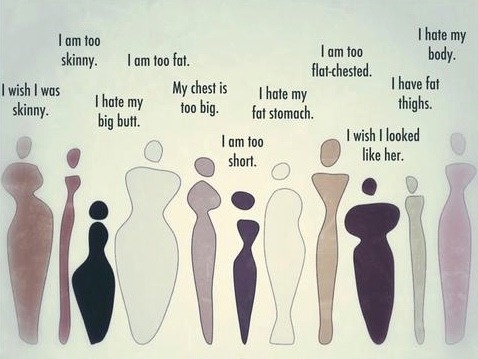
When we body-shame ourselves

Body shaming can leave emotional scars and many of us shame ourselves, regardless of our size. With the right strategies, you can rebuild your self-esteem and develop a healthier relationship with your body. Here are some ways to overcome the effects of body shaming:

Develop Self-Compassion
  • Practice Self-Love: Treat yourself with kindness and compassion. Shift your focus to your strengths and qualities that make you unique. Daily affirmations and self-acceptance exercises can help foster a more positive relationship with yourself.
  • Forgive Yourself for Negative Self-Talk: Body shaming can cause people to internalize negative messages about their appearance, leading to harsh self-criticism. When you catch yourself engaging in negative self-talk, gently remind yourself that those thoughts aren’t facts, and try to reframe them with kindness. It’s okay to have difficult days, but over time, replacing negative thoughts with positive ones can help break the cycle of shame.

Focus on Health and Well-being (not weight)

  • Shift Your Focus to Health, Not Appearance: Instead of fixating on appearance or weight, try to focus on how your body feels and what it can do. Incorporate physical activity, nutritious eating, and self-care practices that make you feel strong, energized, and confident, rather than aiming for an aesthetic goal.
  • Health at Every Size (HAES): This approach emphasizes that people can pursue health and well-being at any size and focuses on behaviors that support overall health (like regular movement, balanced nutrition, and stress management) rather than trying to conform to a specific body shape.
Rebuild Your Self-Esteem
  • Practice Gratitude for Your Body: Make a habit of acknowledging and being grateful for what your body does for you every day, whether it’s allowing you to walk, dance, hug loved ones, or simply survive. This shift in focus from what your body looks like to what it can do can help create a healthier relationship with it.
Set Boundaries and Assert Yourself
  • Address Body Shaming Behavior: People close to you may not understand that you have issues with your appearance. They may make comments about others to you, which in effect deepens your shaming because if that’s what they say about someone else, what are they saying about you behind your back? It’s toxic talk that can be addressed regardless of to whom it is directed. If someone close to you engages in body shaming, it’s important to set clear boundaries. You can assert yourself by letting them know how their comments make you feel and asking them to stop. For example, you might say, “I’d appreciate it if we could avoid conversations about weight or appearance. It’s not something I’m comfortable discussing.”
  • Limit Exposure to Harmful Environments: If certain spaces or people consistently body shame you or others, it’s okay to distance yourself from them. Protecting your mental and emotional health is a priority, and creating safe environments for yourself is an important part of healing.
Practice Mindfulness and Body Neutrality
  • Mindful Self-Reflection: Practices such as prayer, mindfulness, and journaling can help you become more accepting about your body without self-judgment. These practices allow you to observe your thoughts and emotions and cultivate a non-reactive and accepting attitude toward your body.
Take Small, Empowering Steps
  • Redefine Your Relationship with Clothing: Wear clothes that make you feel comfortable and confident, regardless of societal opinions or trends. Dressing for yourself, rather than others, can be a powerful act of self-expression and confidence.
  • Engage in Activities You Enjoy: Participate in activities and hobbies that make you feel good about yourself. Whether it’s dancing, painting, or hiking, engaging in activities you enjoy can shift the focus away from body appearance and toward personal fulfillment and joy.
Talk to Professional
  • It doesn’t have to be a counselor or therapist: If you’re not into talking with a counselor or therapist, then that is not the right route for you. Finding professionals who can help you take in a healthy diet, dress so you feel confident, and participate in medical practices that are most beneficial to you could be all you need.

Overcoming the effects of body shaming requires self-compassion, patience, and a conscious effort to rebuild self-esteem. This is a change in lifestyle, not a temporary thing. By surrounding yourself with positive influences, seeking professional support, focusing on health rather than appearance, and setting boundaries, you can begin to heal from the trauma of body shaming. Embracing body diversity and practicing mindfulness can further help in fostering a more positive relationship with your body, enabling you to live a life free from shame and full of self-acceptance.